

Upgrading or moving to Sitecore is not just a technical update. It changes how your teams publish content, how your systems connect, how your website performs, and how customers interact with your brand. If the move is rushed, it creates new problems. If it is planned well, it removes years of built-up complexity.
At Techindo, we treat Sitecore migration as a serious business decision. It needs clear thinking, honest review, and careful execution.
Do not begin with versions or hosting models. Start with purpose.
Are pages loading slowly?
Is publishing taking too long?
Are marketing tools sitting unused?
Are integration issues causing manual work?
Are compliance rules changing?
A migration without a clear reason usually becomes expensive and unfocused. Every technical choice must support a defined business goal.
Most platforms grow messy over time. Extra templates, unused media, outdated connectors, and custom code from years ago all add weight.
If you are already using Sitecore, review:
If you are moving from another CMS, review:
Not everything should move as it is. Some parts should be simplified. Some should be rebuilt.
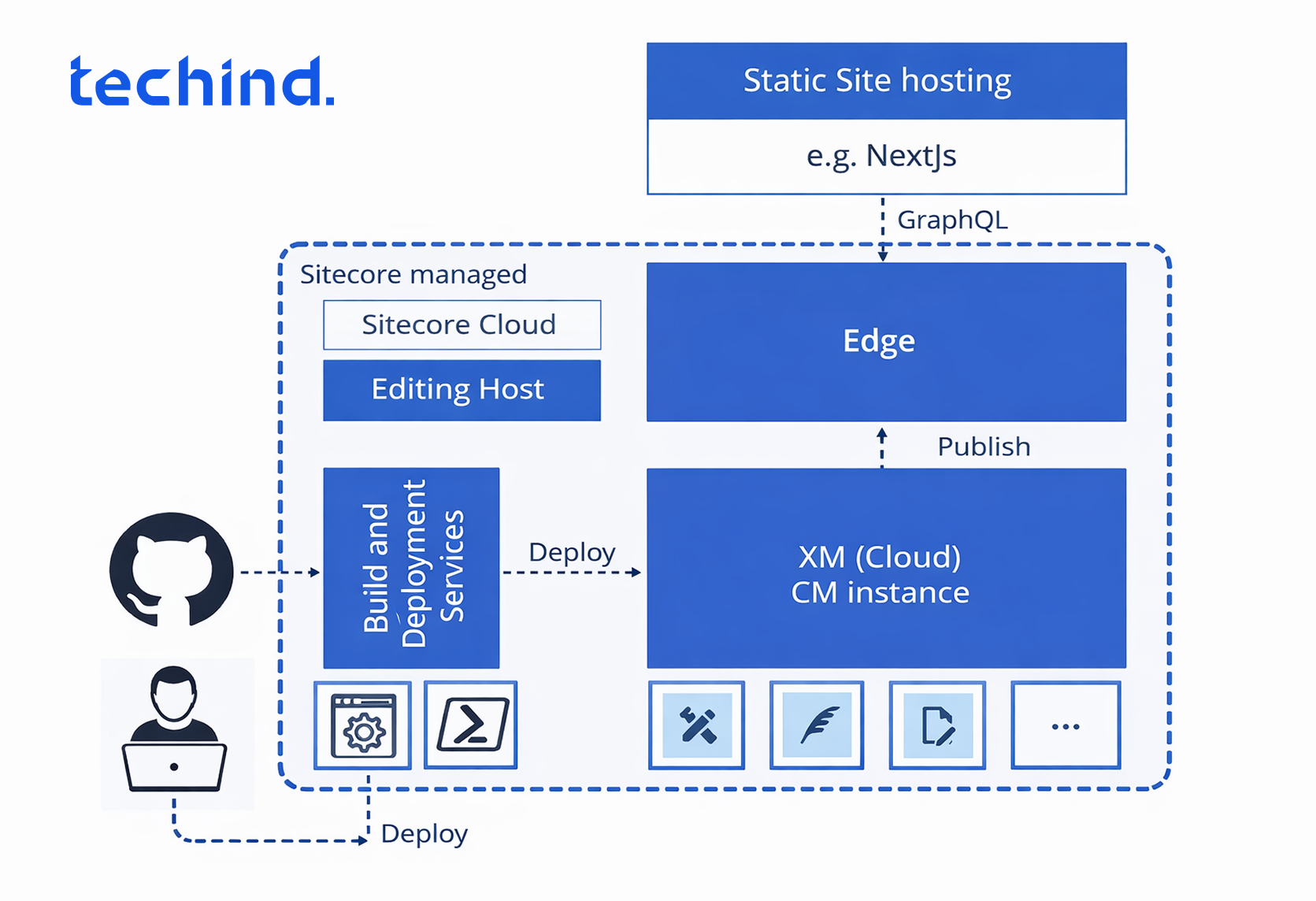
One of the most important decisions is the platform structure you will use after migration. Many organizations compare traditional XP deployments, XM for CMS-focused needs, and SaaS models such as XM Cloud.
Each option has trade-offs.
XP offers strong marketing and analytics features but requires more infrastructure management.
XM focuses on content management with fewer marketing tools.
XM Cloud reduces infrastructure responsibility but gives less control over lower-level settings.
This decision affects cost, hosting responsibility, compliance flexibility, upgrade cycles, and team workload. It should match both your business goals and your internal capability.
Media libraries often become cluttered. Large images, duplicate files, broken links, and outdated assets slow websites down.
Before migration:
Cleaning media improves performance and reduces storage costs.
If you use analytics, segmentation, or rule-based personalization, plan carefully.
Review:
If these elements are not migrated correctly, reporting will break and marketing teams will lose visibility. Build in validation steps before and after launch.
Most Sitecore setups connect to several systems:
Create a full list. Identify which ones are critical. Review how authentication works and how data flows. If you change hosting or move to SaaS, some integrations may need updates.
Integration issues are one of the most common causes of launch delays.
Search can drive engagement and revenue. It can also add cost without delivering value.
Ask:
Migration is a good time to simplify or improve search, based on real usage data.
Security planning must happen early.
Check:
Hosting decisions must support compliance needs. For some industries, infrastructure control is critical. For others, SaaS may be suitable.
Capture current metrics before you start:
Without baseline numbers, you cannot prove improvement. Migration gives you the chance to adjust caching, CDN settings, and rendering approaches, but you must measure results.
There are three common approaches.
Lift and Shift
Move the system with minimal changes. Faster, but keeps existing issues.
Phased Migration
Move sections gradually. Lower risk, but requires temporary parallel systems.
Full Rebuild
Rebuild and switch over at once. Cleaner long term, but needs strong coordination.
Choose based on budget, timeline, and risk tolerance.
Our approach includes:
We focus on clarity and practical decisions. No unnecessary complexity. No rushed upgrades.
A successful Sitecore migration makes daily work easier, improves website performance, and strengthens system reliability. It should reduce confusion, not add to it.
Plan carefully. Clean what no longer serves you. Build for long-term stability.
Planning a Sitecore migration?
Let’s review your current setup and define a clear path forward. Our team can assess your architecture, integrations, and performance baseline and recommend the right migration approach for your business.
Talk to a Sitecore Expert


Discover tailored solutions. Connect with our experts today.


 INDIA
INDIA
