

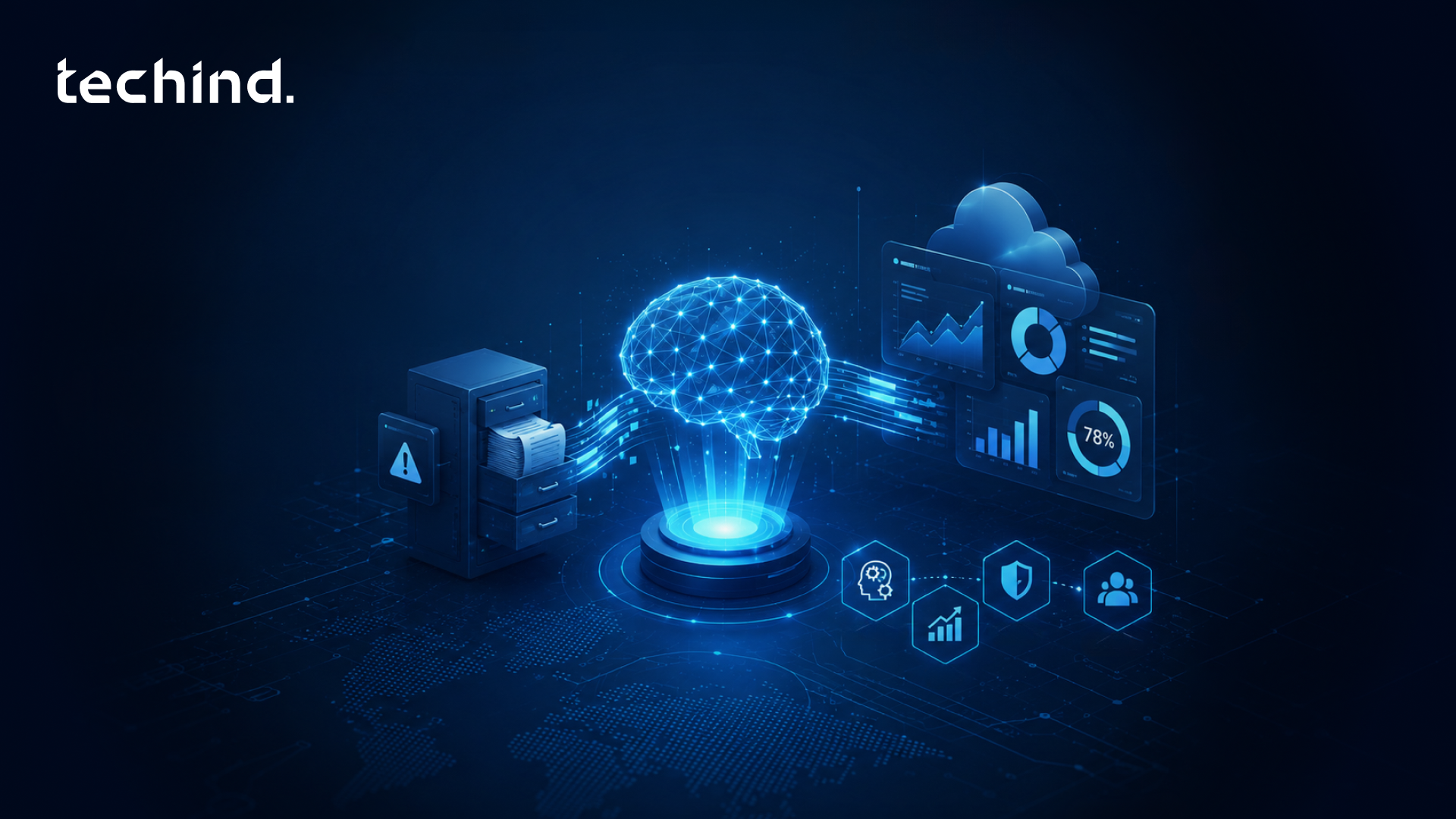
Technology has never stood still. Yet, many organizations still depend on systems that were designed for a different business landscape. These platforms have supported operations for years, sometimes even decades, but today's digital economy demands far greater agility, intelligence, and connectivity.
Replacing every legacy system is rarely practical. It is expensive, disruptive, and often unnecessary. A more sustainable path lies in modernization, enhancing existing technology with AI capabilities, cloud-native engineering, and seamless enterprise integration. This approach enables businesses to preserve what works while preparing confidently for what comes next.
At Techindo, we believe modernization is not about abandoning the past. It is about transforming proven systems into future-ready digital assets.
Legacy applications often contain an organization's most valuable business logic and operational knowledge. Unfortunately, they can also introduce barriers such as slow deployments, fragmented data, limited scalability, and growing maintenance costs.
As customer expectations evolve and markets become increasingly competitive, businesses require technology that can adapt just as quickly.
Modernizing legacy systems allows organizations to:
Improve operational efficiency
Accelerate innovation cycles
Strengthen security and compliance
Enable real-time decision-making
Support sustainable business growth
Rather than rebuilding from the ground up, modernization unlocks greater value from existing investments.
Artificial Intelligence has shifted from an emerging trend to a business necessity. Organizations are using AI to automate routine tasks, uncover meaningful insights, and improve customer experiences at scale.
Yet AI cannot deliver its full potential if it operates on disconnected or outdated infrastructure.
By integrating AI into modernized legacy environments, businesses can:
Automate repetitive workflows
Predict operational risks before they escalate
Deliver personalized customer interactions
Analyze business data with greater accuracy
Improve forecasting through intelligent analytics
Instead of replacing familiar systems, AI extends their capabilities, allowing enterprises to work smarter while preserving operational continuity.
Traditional applications were designed for stability. Modern businesses require flexibility.
Cloud-native engineering introduces an architecture built for continuous improvement. Applications become modular, scalable, and easier to maintain, allowing organizations to respond quickly to changing business demands.
A cloud-native foundation offers several advantages:
Faster software releases
Better system resilience
Efficient resource utilization
Reduced infrastructure costs
Improved application performance
Modernization is no longer limited to migrating servers. It involves redesigning applications to fully leverage cloud capabilities while maintaining business continuity throughout the transition.
Even advanced technologies lose value when they operate in isolation.
Many organizations struggle with disconnected applications, duplicated information, and inconsistent business processes. These gaps slow decision-making and reduce operational visibility.
Enterprise integration bridges these divides by connecting systems across departments, creating a unified digital ecosystem where information flows securely and efficiently.
Effective integration enables organizations to:
Eliminate data silos
Synchronize business processes
Improve collaboration across teams
Enable real-time information sharing
Create consistent customer experiences
When every system communicates seamlessly, businesses gain a clearer understanding of operations and can respond with greater confidence.
AI enhancement, cloud-native engineering, and enterprise integration are not isolated initiatives. Together, they establish a technology landscape that is intelligent, connected, and adaptable.
Organizations adopting this integrated approach experience benefits that extend well beyond IT departments.
They gain:
Faster business innovation
Greater operational visibility
Lower maintenance costs
Improved customer satisfaction
Stronger scalability for future growth
Increased resilience in an evolving digital economy
Modernization becomes a long-term business strategy rather than a one-time technology project.
Every organization follows a different modernization path. Some require gradual application transformation, while others need cloud migration, AI integration, or enterprise-wide connectivity.
At Techindo, we work alongside businesses to design modernization strategies that align with operational goals without disrupting mission-critical systems.
Our expertise includes:
Legacy application modernization
AI-driven business solutions
Cloud-native engineering
Enterprise application integration
Digital transformation consulting
By combining proven methodologies with practical technology solutions, we help organizations modernize confidently while protecting the value of their existing investments.
The AI era is reshaping industries at an unprecedented pace. Organizations that continue relying on rigid, disconnected systems risk falling behind, while those embracing thoughtful modernization position themselves for lasting success.
Legacy systems should not be viewed as obstacles. With the right strategy, they become the foundation for innovation, intelligence, and sustained growth.
Modernization is not simply about adopting new technology, it is about enabling businesses to evolve with confidence, adapt without disruption, and create lasting value in an increasingly digital world.


Discover tailored solutions. Connect with our experts today.


 INDIA
INDIA
